
Last updated September 23, 2026
Free visual inspection and a written scope of work before any mitigation begins - photos, moisture readings, and drying logs go in your claim file
The scope we write is the scope we bill. Anything new gets shown to you, in writing, before we touch it.
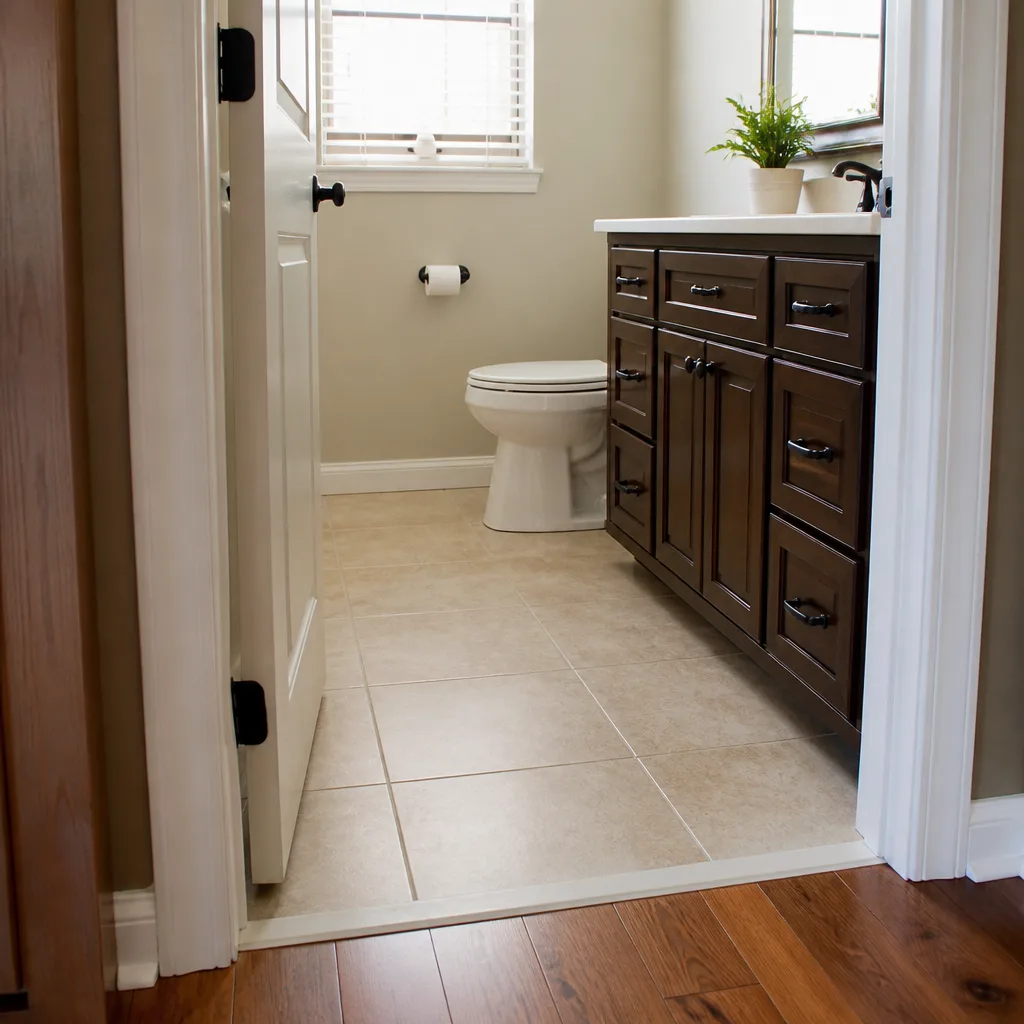

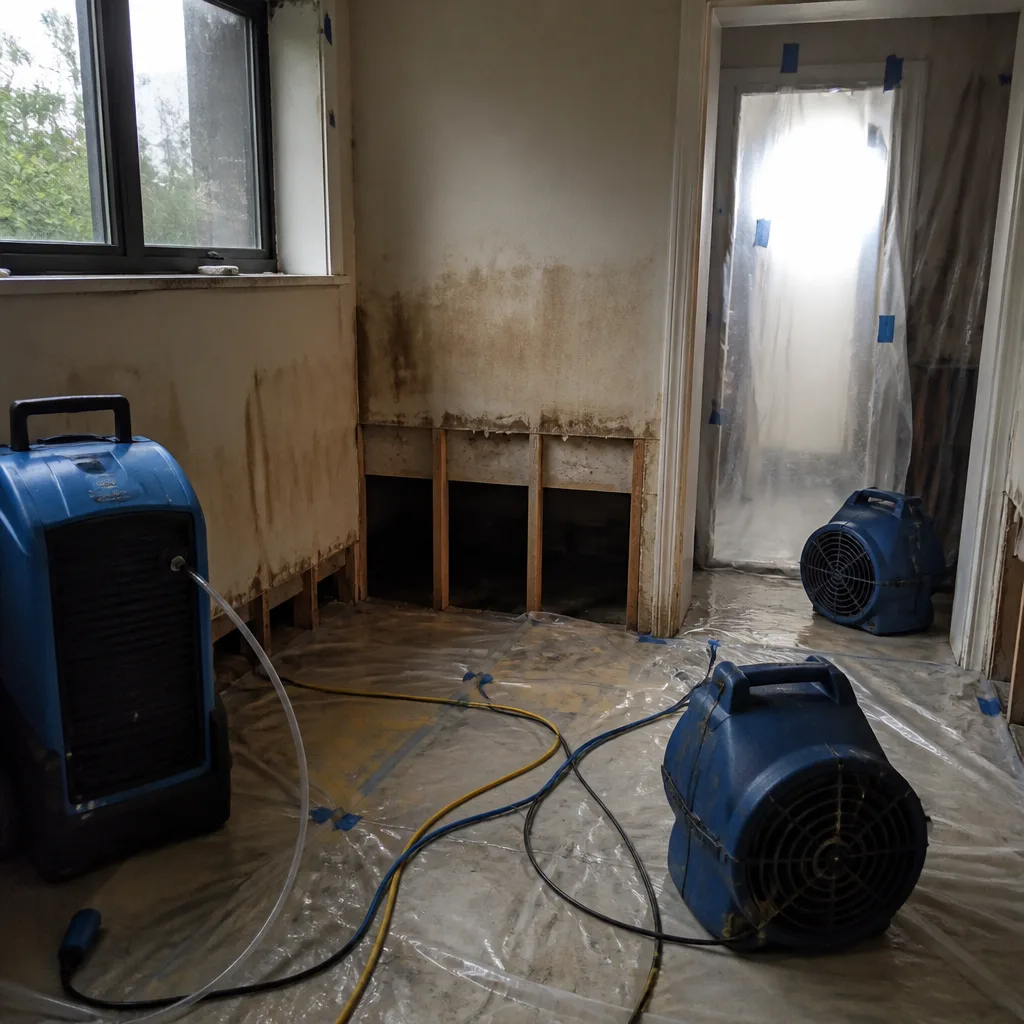 Before
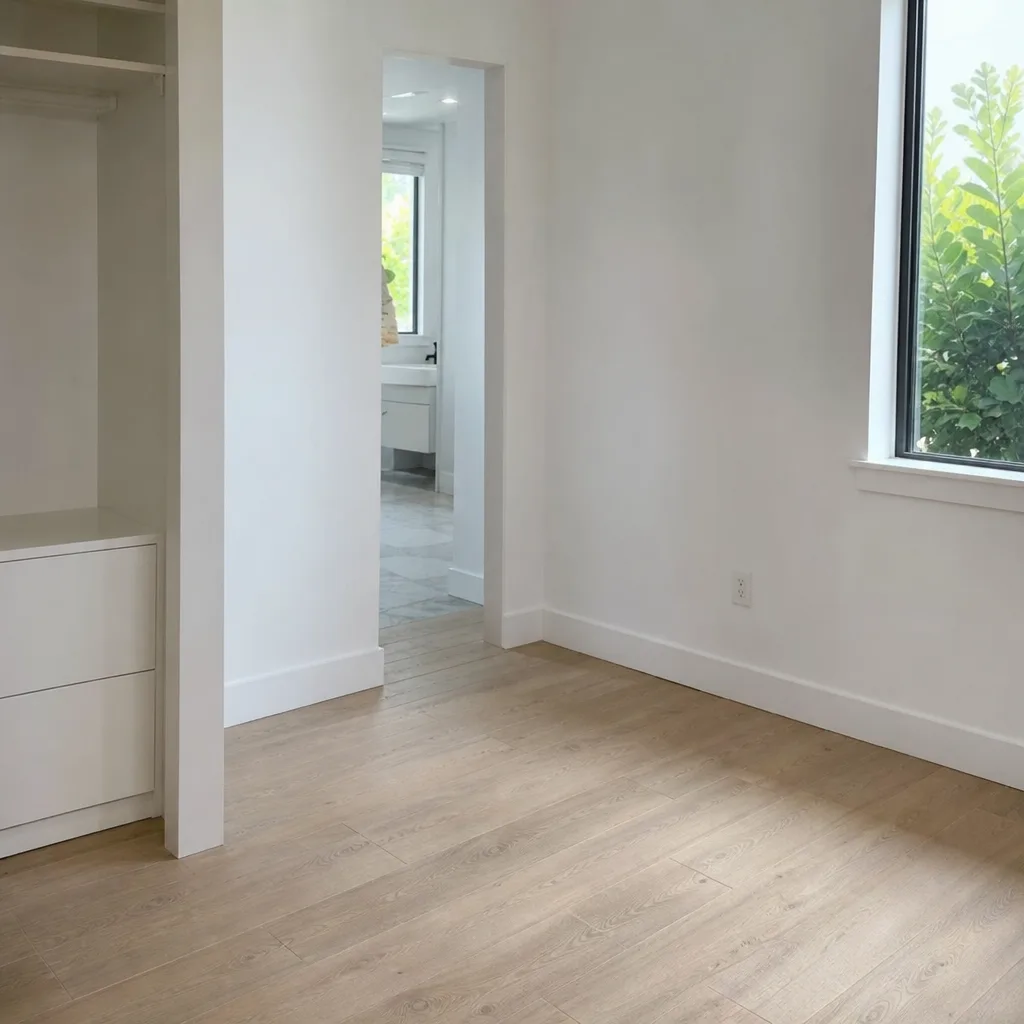 After
After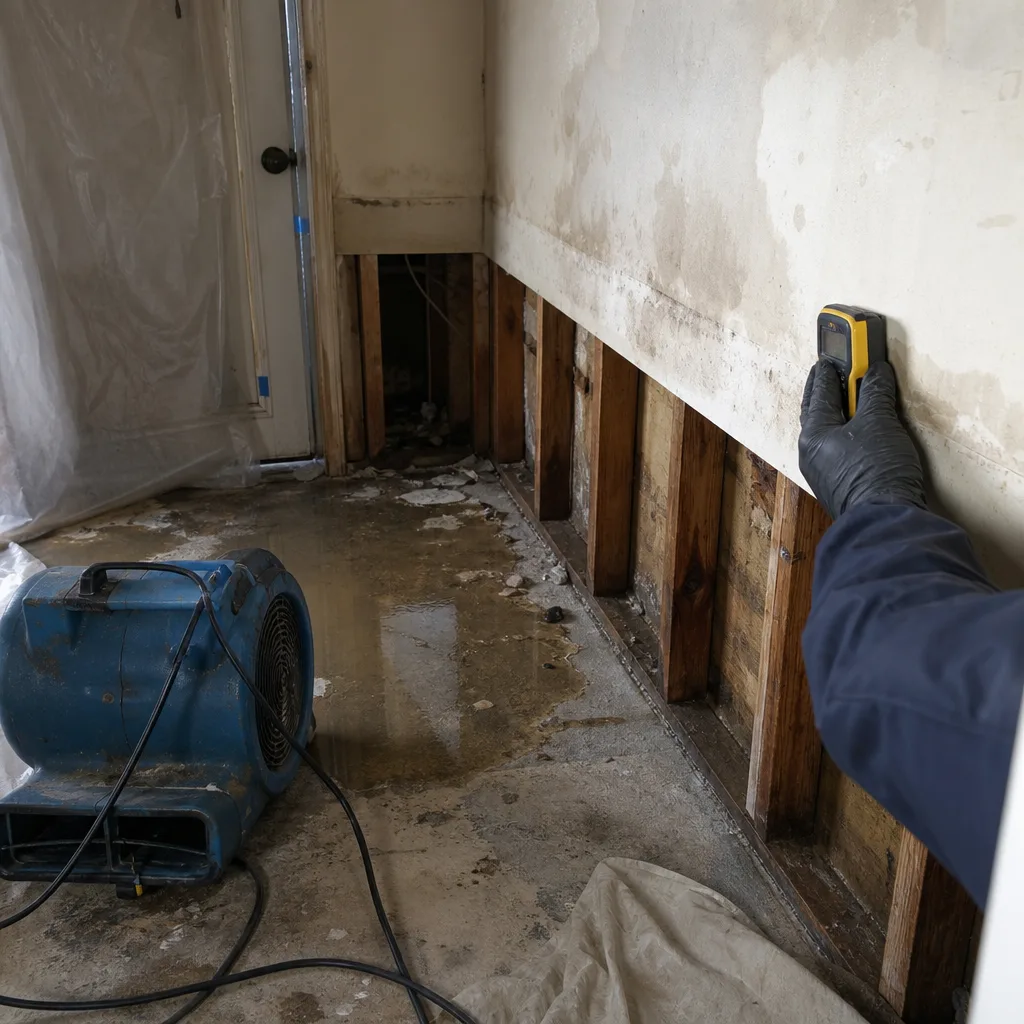 Before
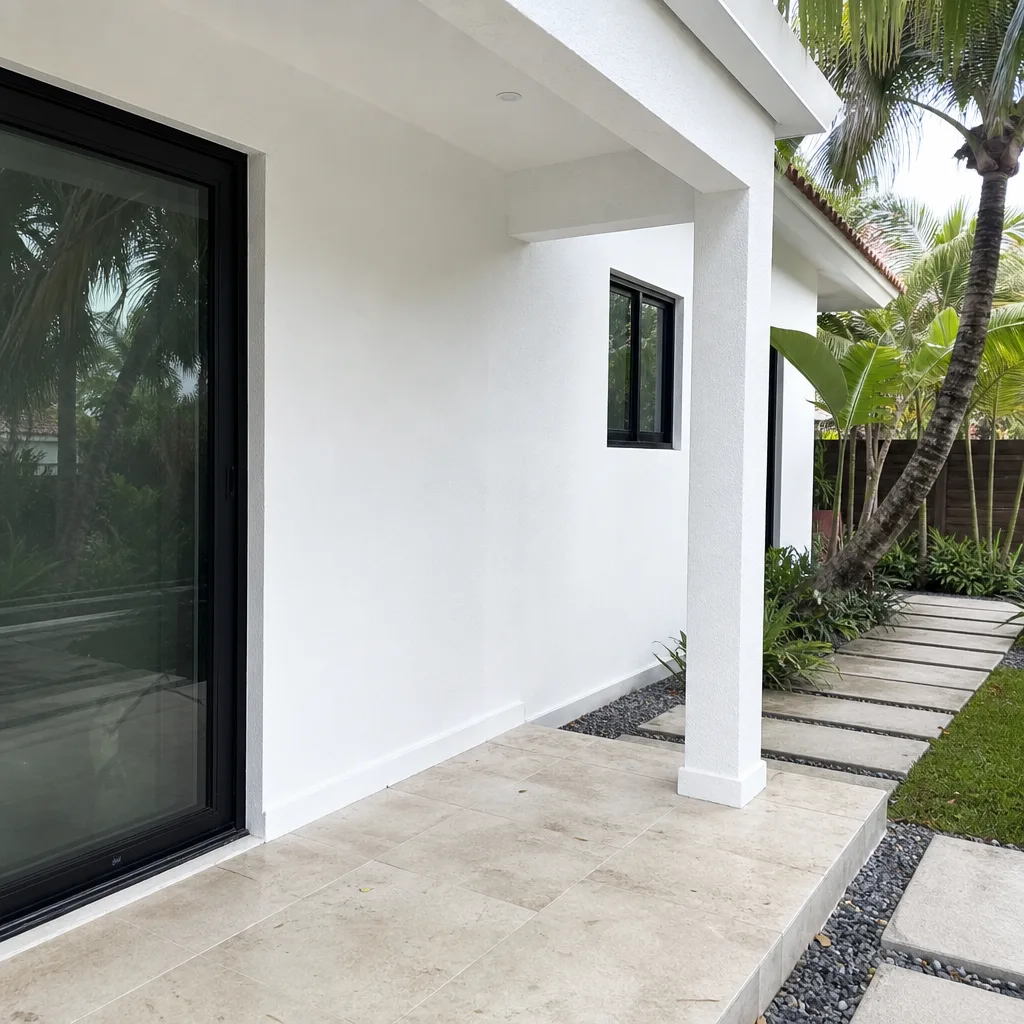 After
After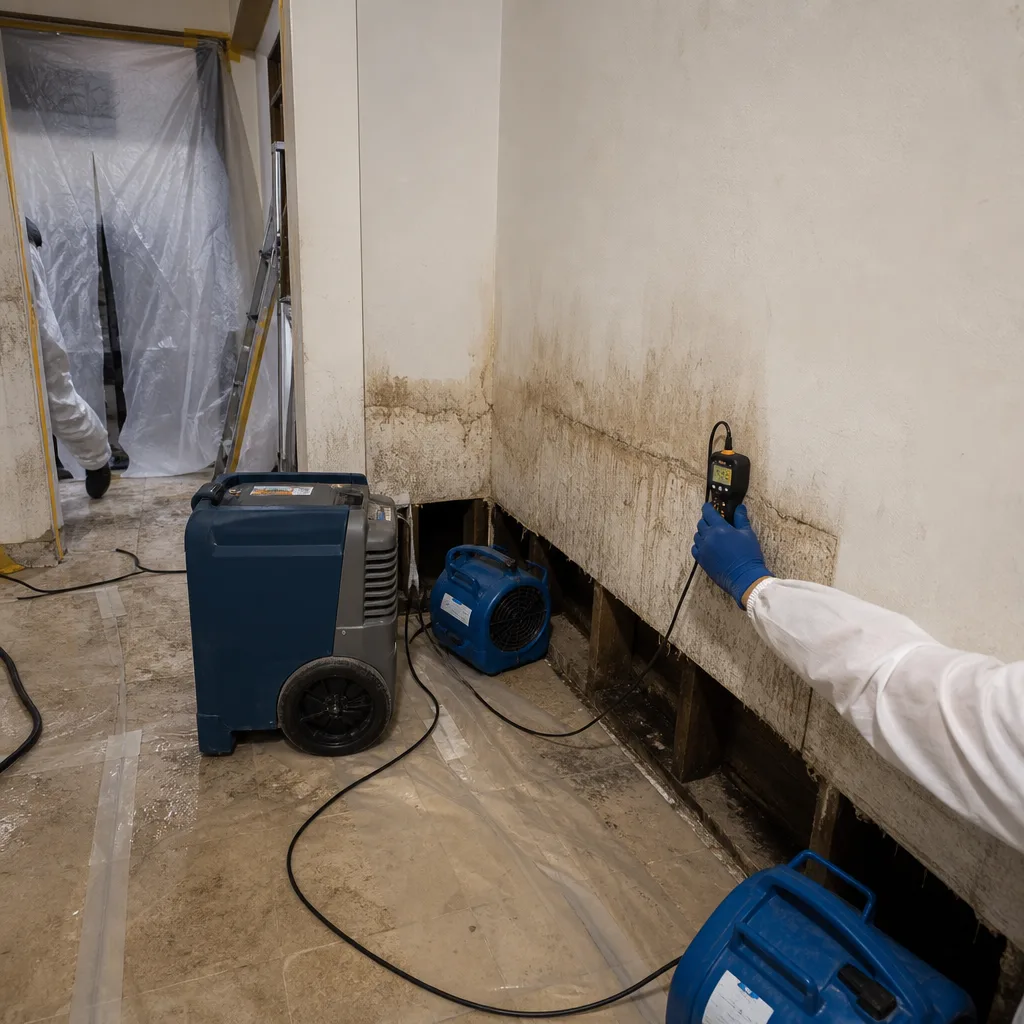 Before
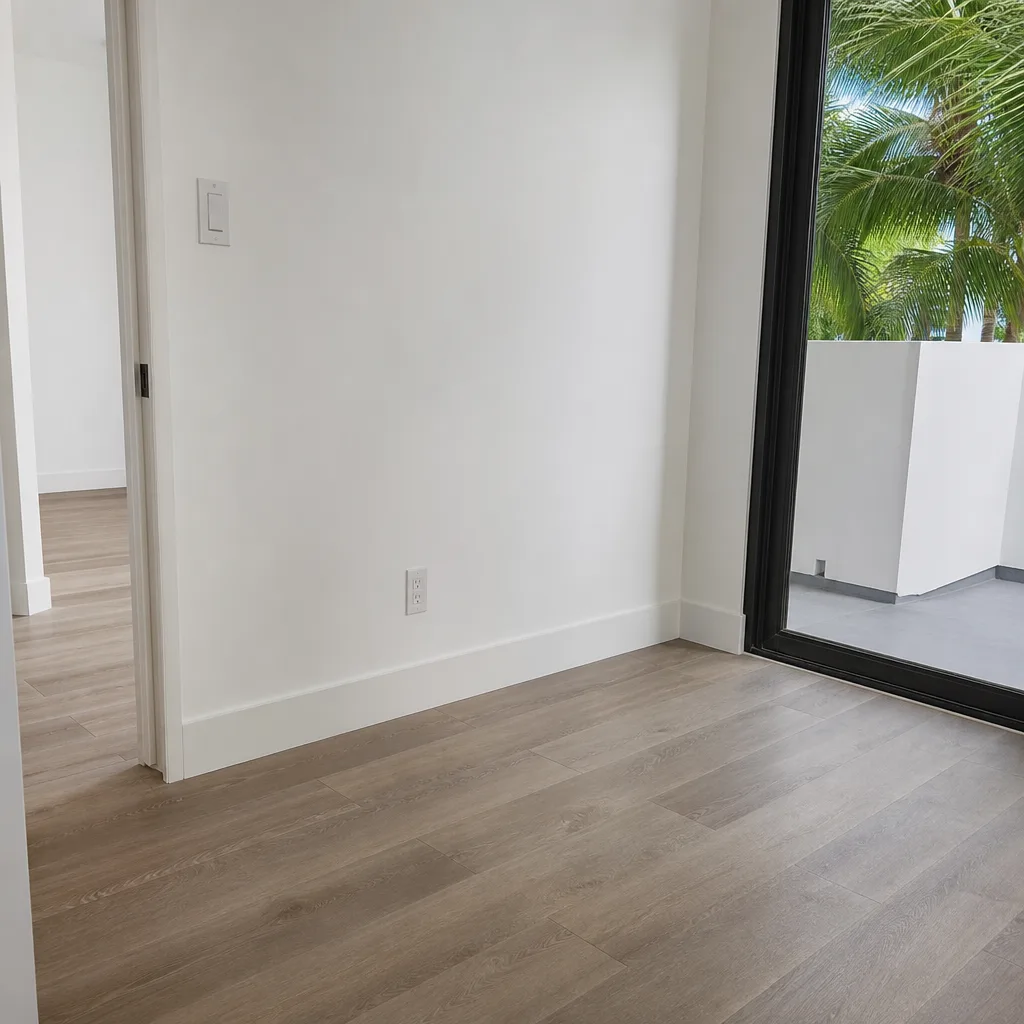 After
AfterHow to Hire a Damage Restoration Contractor in Miami Beach: A Step-by-Step Guide
Florida leads the nation in Assignment of Benefits litigation, and Miami-Dade County is its epicenter. In 2022 alone, state regulators documented over 100,000 AOB lawsuits, many originating from homeowners who signed contractor paperwork in the first 24 hours of a water loss without reading the fine print. Once you sign that form, you’ve transferred control of your insurance claim to the contractor, not just the repair invoice. In Miami Beach, where high-rise plumbing failures and seasonal storm surges create constant demand, the contractors who pressure you to sign immediately are often the ones who profit most from your haste. This guide reframes hiring as a procurement decision built around five documents, not five phone questions.
Quick Answer
To hire a damage restoration contractor in Miami Beach, verify their Florida DBPR license and Miami-Dade permit history, then require five documents before any work begins: a written scope of work, an itemized estimate using Xactimate category codes, a moisture baseline report with psychrometric readings, a certificate of insurance listing your property address, and a contract that excludes broad Assignment of Benefits language. Never sign paperwork under pressure while water is still moving.
Table of Contents
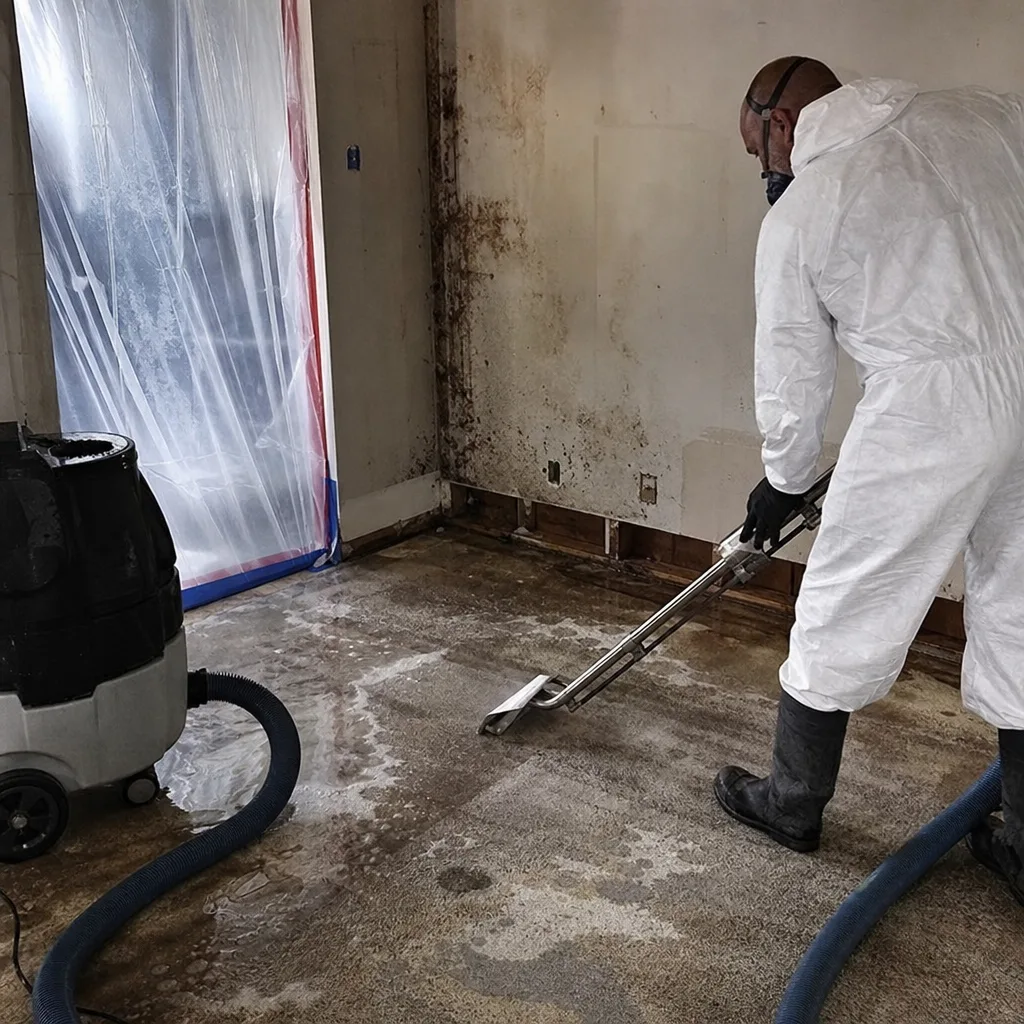
- Why Assignment of Benefits Matters in Miami Beach
- The Five Pre-Work Documents Every Contractor Must Produce
- How to Verify a Florida DBPR License and Miami-Dade Permit History
- What “We Work Directly With Your Insurance” Actually Means
- Three Contract Clauses Florida Homeowners Should Refuse to Sign
- How to Compare Bids Using Xactimate Category Codes
- Miami-Specific Risks: Climate, Codes, and Building Types
- Common Mistakes to Avoid
- When to Call a Professional
- Frequently Asked Questions
- The Bottom Line
BeforeAfterWhy Assignment of Benefits Matters in Miami Beach
In 2019, Florida lawmakers passed reforms intended to curb AOB abuse. The problem persists because the reform created a carve-out for emergency services, and contractors in Miami Beach routinely classify every call as an emergency. An Assignment of Benefits is a legal document that transfers your right to collect insurance payments directly to the contractor. You lose the ability to dispute charges, negotiate with your adjuster, or even know what was billed until the lawsuit arrives.
We’ve reviewed competitor estimates where the AOB was buried on page three of a “Work Authorization” form, signed at 2 a.m. while a family watched their living room flood. The contractor later billed the insurer $47,000 for a job that should have cost $8,500. The homeowner learned about the lawsuit when their carrier non-renewed their policy.
The legitimate alternative is direct payment plus a signed direction-to-pay, which keeps you in control. Any contractor who refuses this structure and insists on a full AOB is telling you something about their business model. In Miami Beach’s dense condominium market, where a single pipe break can affect six units, AOB abuse multiplies fast. One signed form can trigger six separate lawsuits, with each unit owner named as a plaintiff they never agreed to join.
At DryMark Restoration Miami Beach home, we do not use Assignment of Benefits agreements. Haven Standard, Clause 1 requires a written price before work begins, which means the homeowner sees and approves every line item before we start. No transferred rights, no hidden authorizations, no surprises in six months when the litigation notice arrives.
The Five Pre-Work Documents Every Contractor Must Produce
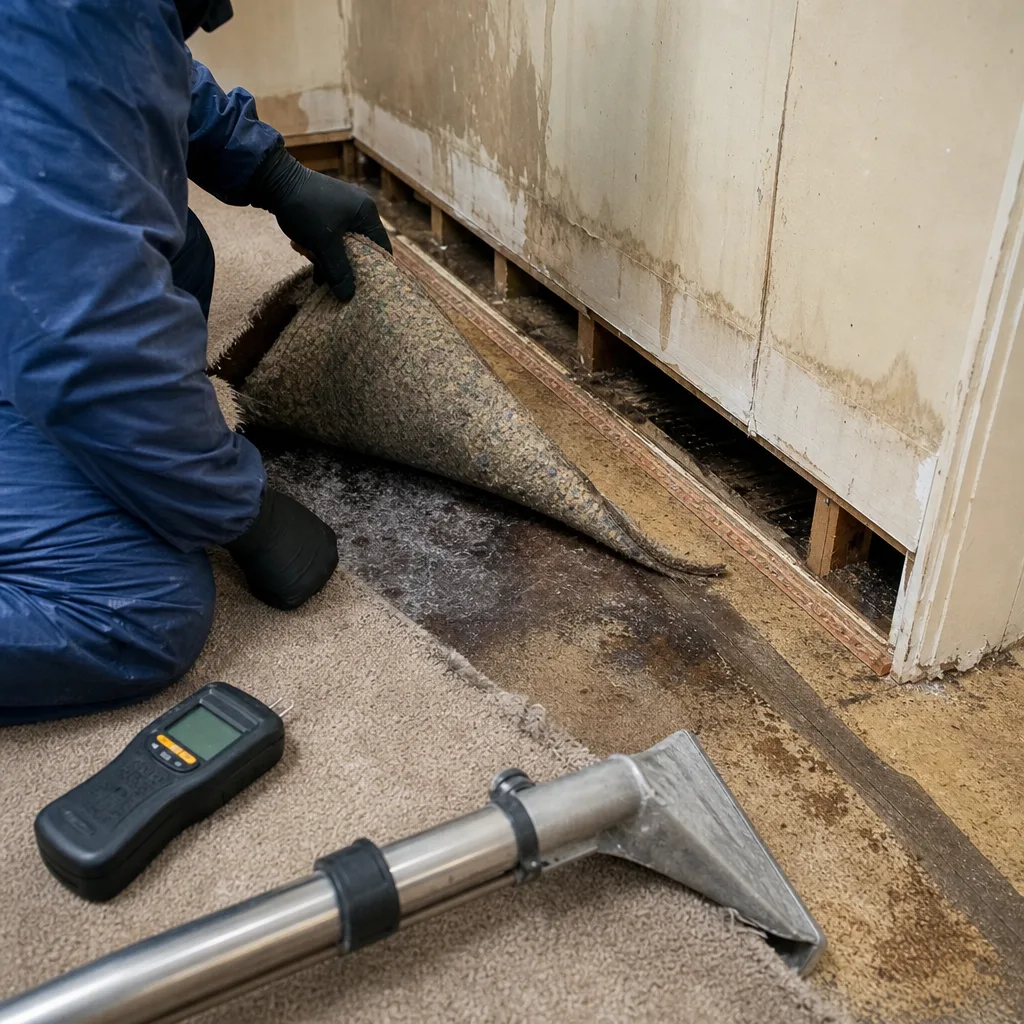
These five documents separate a professional restoration operation from a pickup truck with a wet vac. Ask for them before anyone enters your unit. A contractor who cannot produce them on demand is a contractor who cannot document your claim properly.
1. Written Scope of Work
This is not a one-page summary. A proper scope lists every affected room, the specific materials involved (Category 1, 2, or 3 water; Class 1-4 destruction), the equipment to be deployed, the daily monitoring schedule, and the completion criteria. For a Miami Beach high-rise unit, it should also note the building’s fire suppression system status and any required coordination with the association’s master policy.
2. Itemized Estimate Using Xactimate Category Codes
Xactimate is the pricing software used by most insurance carriers. When your contractor uses the same category codes (WTR for water, FRM for framing, DRY for drying equipment), you can compare their bid directly against your adjuster’s estimate. We’ll cover this in detail below.
3. Moisture Baseline Report with Psychrometric Readings
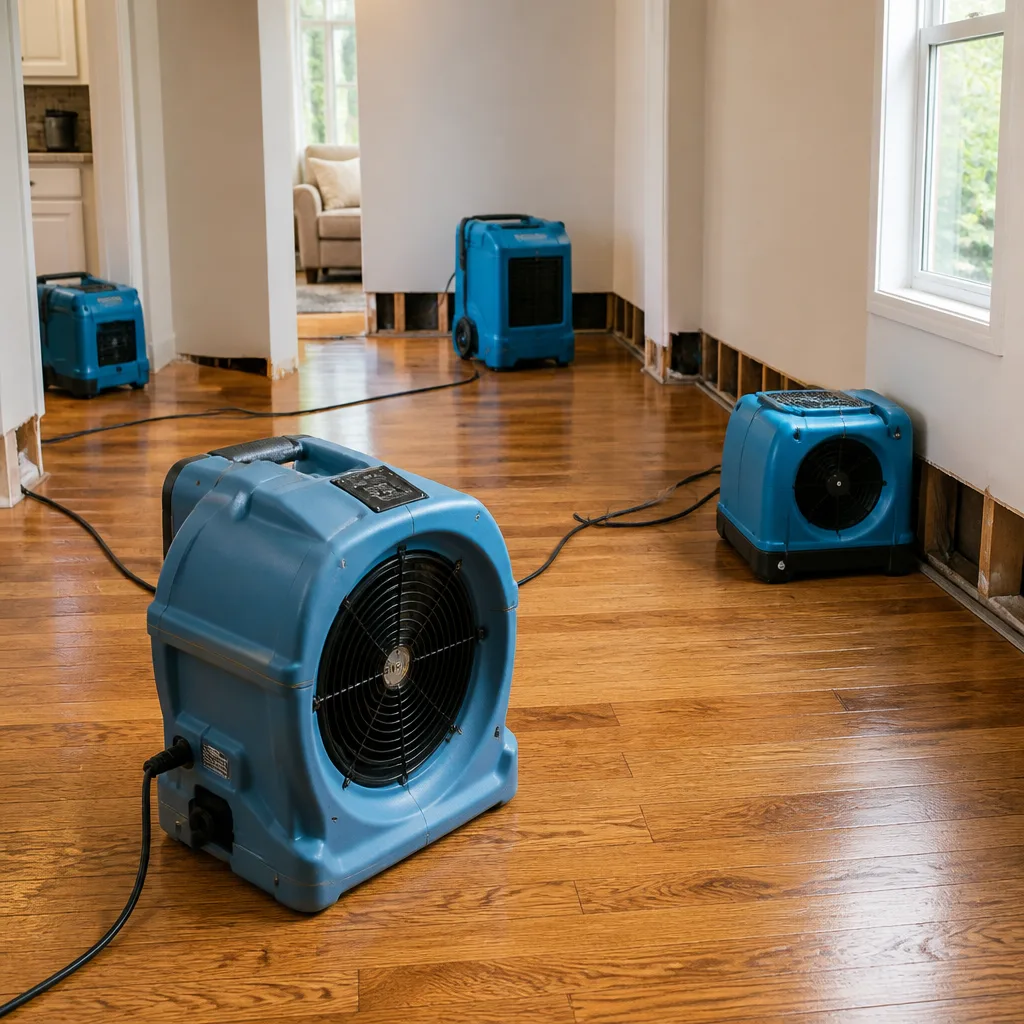
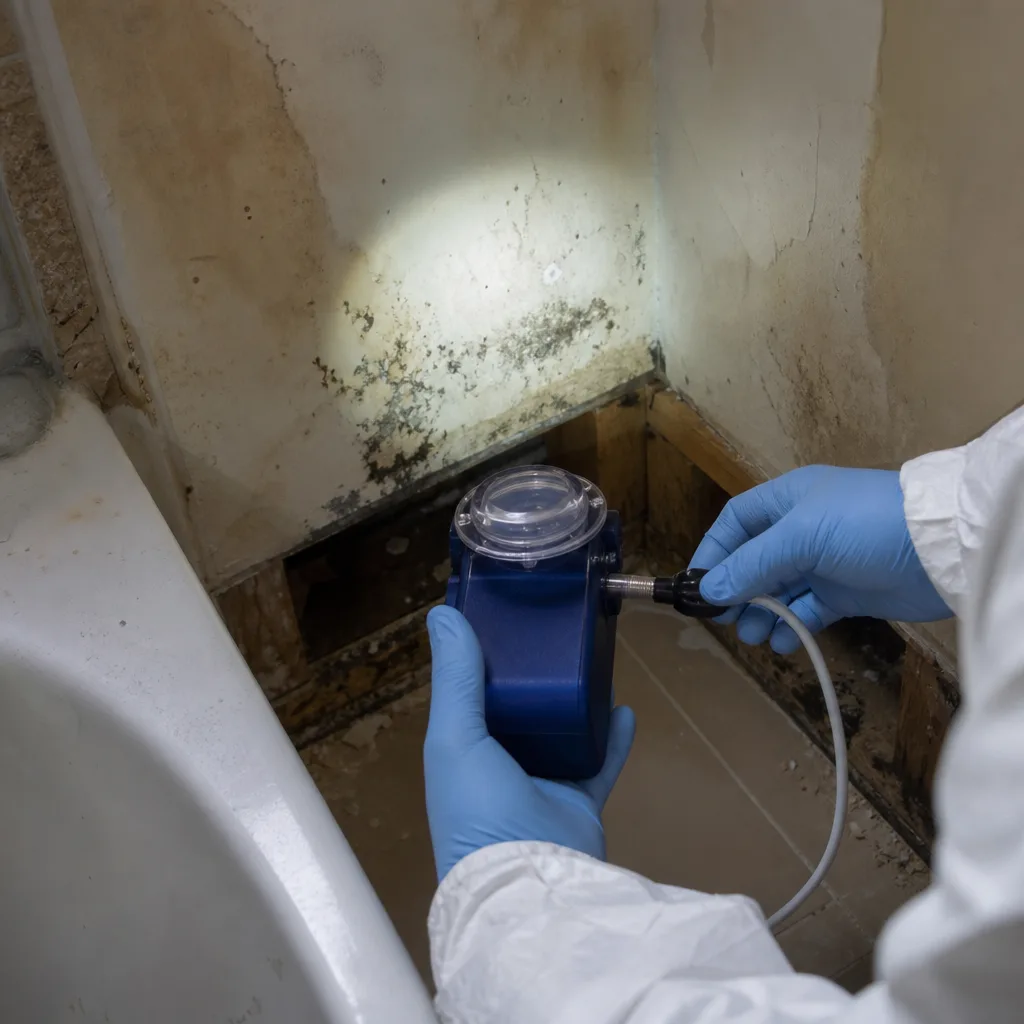
Psychrometrics is the study of air and moisture relationships. A baseline report documents the temperature, relative humidity, and specific humidity in each affected room before drying begins, plus moisture content readings from affected materials using a calibrated pin or pinless meter. Without this baseline, there is no objective way to prove the structure returned to pre-loss condition. Our crews use Dri-Eaz and Phoenix dehumidifiers with built-in data logging, and we provide daily moisture logs as standard documentation.
4. Certificate of Insurance Listing Your Property Address
General liability and workers compensation certificates are not enough. The certificate should name your specific Miami Beach property address as the certificate holder, confirming coverage is active for work at your location. Ask for it to be emailed directly from the insurance broker, not handed to you on paper that could be outdated.
5. Florida DBPR License Verification Printout
We’ll cover the verification process in the next section. The key point: the contractor should hand you a current printout without being asked, not make you hunt for it yourself.
How to Verify a Florida DBPR License and Miami-Dade Permit History
Florida’s Department of Business and Professional Regulation maintains a public license search at myfloridalicense.com. For restoration work in Miami Beach, you need a Certified General Contractor (CGC) or a Residential Contractor (CRC) for structural repairs, and a Mold Remediator (MRSR) for any mold assessment or remediation over 10 square feet. Water mitigation itself does not require a state license, which is part of the problem: anyone with a truck and fans can claim to do it.
Here’s the verification process:
- Search the contractor’s name or company name at myfloridalicense.com.
- Verify the license status shows “Current/Active,” not “Inactive,” “Probation,” or “Revoked.”
- Check the license category matches the work proposed. A roofing contractor cannot legally perform water mitigation or mold remediation.
- Note the license issue date and any disciplinary history. Click “View Enforcement Actions” for details.
- Cross-reference the license holder’s name with the person who signed your estimate. If they differ, ask why.
Next, check Miami-Dade County’s permit history. Visit miamidade.gov and search the property address in the Building section. You’re looking for:
- Open permits that were never closed out. An unclosed permit from 2019 means a contractor started work, pulled a permit, and vanished. The next contractor cannot legally pull a new permit until the old one is resolved.
- Permits pulled without proper licensure. If a handyman pulled a permit that required a CGC, that’s a red flag for the quality of their other work.
- Multiple permits for the same scope. This can indicate a contractor who repeatedly failed inspection and abandoned the job.
In Miami Beach’s Art Deco district and South Beach condo corridors, many buildings have decades of permit history. A contractor who knows the local building department’s quirks, like the extra review required for historic district work or the specific flood elevation certificates needed east of Collins Avenue, will save you weeks of delay. One who doesn’t will blame the city for timeline problems they created themselves.
What “We Work Directly With Your Insurance” Actually Means
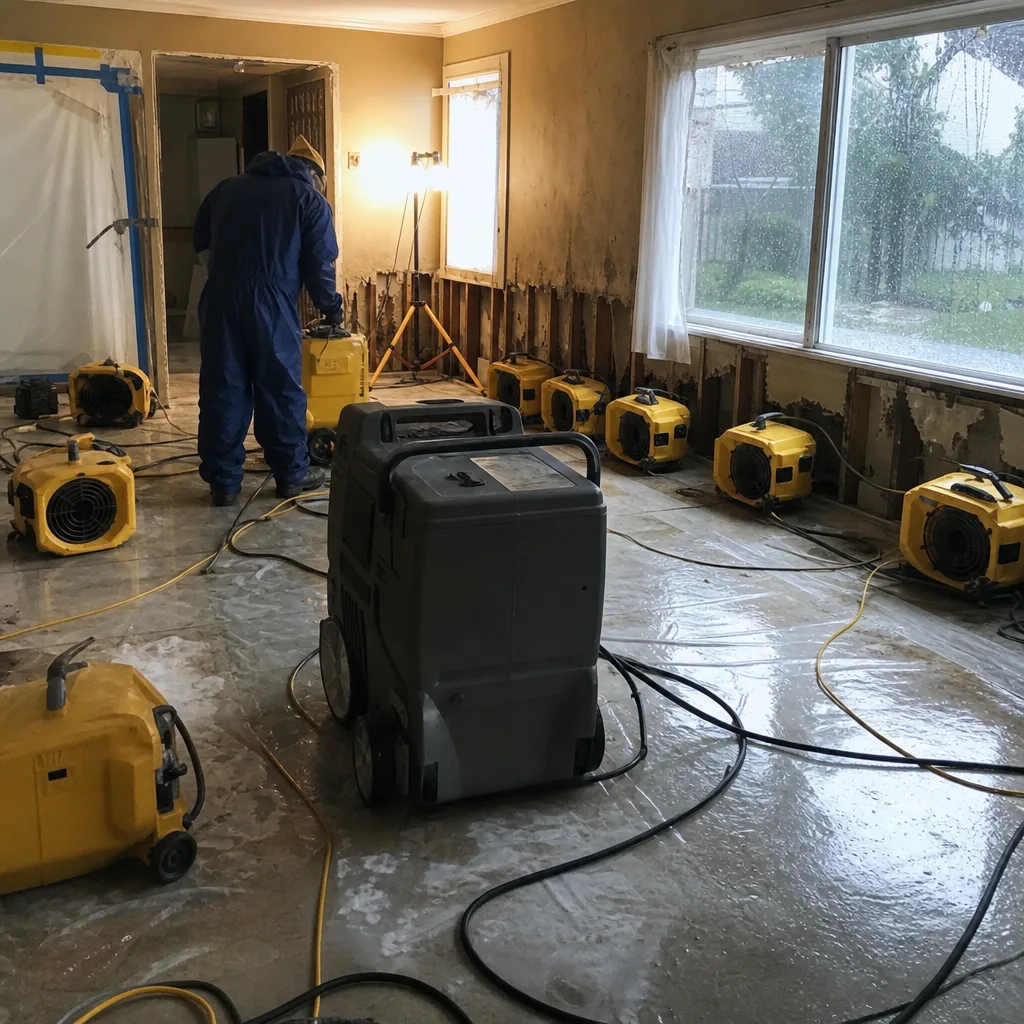
This phrase appears on nearly every restoration website in Miami Beach, including some that have never successfully coordinated a claim. What it actually means varies dramatically, and the variation matters to your wallet.
The legitimate version: your contractor documents every step with photos, moisture logs, and Xactimate line items, then submits this package to your adjuster for review. The adjuster approves, disagrees, or requests more information. You remain in the loop, and the final payment flows through you or with your signed direction-to-pay.
The problematic version: your contractor submits a padded estimate directly to your insurer, then sues when the carrier disputes the charges. Because you signed an AOB, you are named in the lawsuit and your policy is at risk. The contractor’s “direct” relationship with your insurance is actually a relationship with their litigation department.
The worst version: your contractor never submits to insurance at all, bills you directly for the inflated amount, and threatens a mechanic’s lien when you can’t pay.
At DryMark Restoration Miami Beach, “working with your insurance” means we produce the documentation package that makes your claim payable. Photo record on every visit. Daily drying logs with psychrometric data. Written scope before work begins, per Haven Standard, Clause 1. We do not sign AOBs, we do not sue carriers, and we do not bill for work that wasn’t documented. If your adjuster wants to walk the site with our technician, we schedule it. If they want moisture readings from a specific date, we have them. The documentation is the service.
For Water Damage Restoration in Miami Beach, this approach is particularly critical. Water claims are the most frequently disputed category in Florida homeowners insurance, and carriers have become aggressive about denying mitigation charges that lack proper documentation. A photo of standing water is not enough. You need dated moisture readings, equipment placement diagrams, and material classification by IICRC standards.
Three Contract Clauses Florida Homeowners Should Refuse to Sign
Restoration contracts in Miami Beach often arrive at moments of stress. Read them anyway. These three clauses should trigger an immediate pause.
Broad Assignment of Benefits Language
Look for phrases like “I hereby assign all insurance rights, benefits, and proceeds” or “contractor is authorized to negotiate and settle all claims.” The 2019 Florida reform requires AOBs to be standalone documents with specific font sizes and notice language, but contractors still embed broad assignment language in work authorizations. If the form mentions “all rights” or “any and all claims,” do not sign. Ask for a direction-to-pay instead, which preserves your control.
Change-Order-Free Authorization
Some contracts include language like “homeowner authorizes all necessary work without additional approval.” This gives the contractor unlimited ability to expand scope and price. Haven Standard, Clause 1 exists specifically to prevent this: every change in scope requires a revised written estimate before work continues. In a Miami Beach high-rise, where a simple pipe break can reveal asbestos-containing drywall or lead paint in older buildings, unexpected conditions are common. The response is a revised written scope, not an open-ended authorization.
Lien Waiver Delays
Florida law allows contractors to file mechanic’s liens for unpaid work, but some contracts require you to waive your right to dispute charges before the contractor will release the lien. This creates a hostage situation: pay the disputed amount, or sell your property with a clouded title. A proper contract specifies that lien rights expire upon final payment after satisfactory completion, not upon payment of whatever the contractor demands.
For Mold Remediation in Miami Beach, these contract traps are especially dangerous. Mold work often reveals additional contamination as demolition proceeds, and contractors who operate on open-ended authorizations can escalate from a $3,000 containment to a $25,000 full remediation before you’ve had breakfast. The written scope with defined completion criteria protects you from scope creep that serves the contractor’s revenue, not your health.
How to Compare Bids Using Xactimate Category Codes
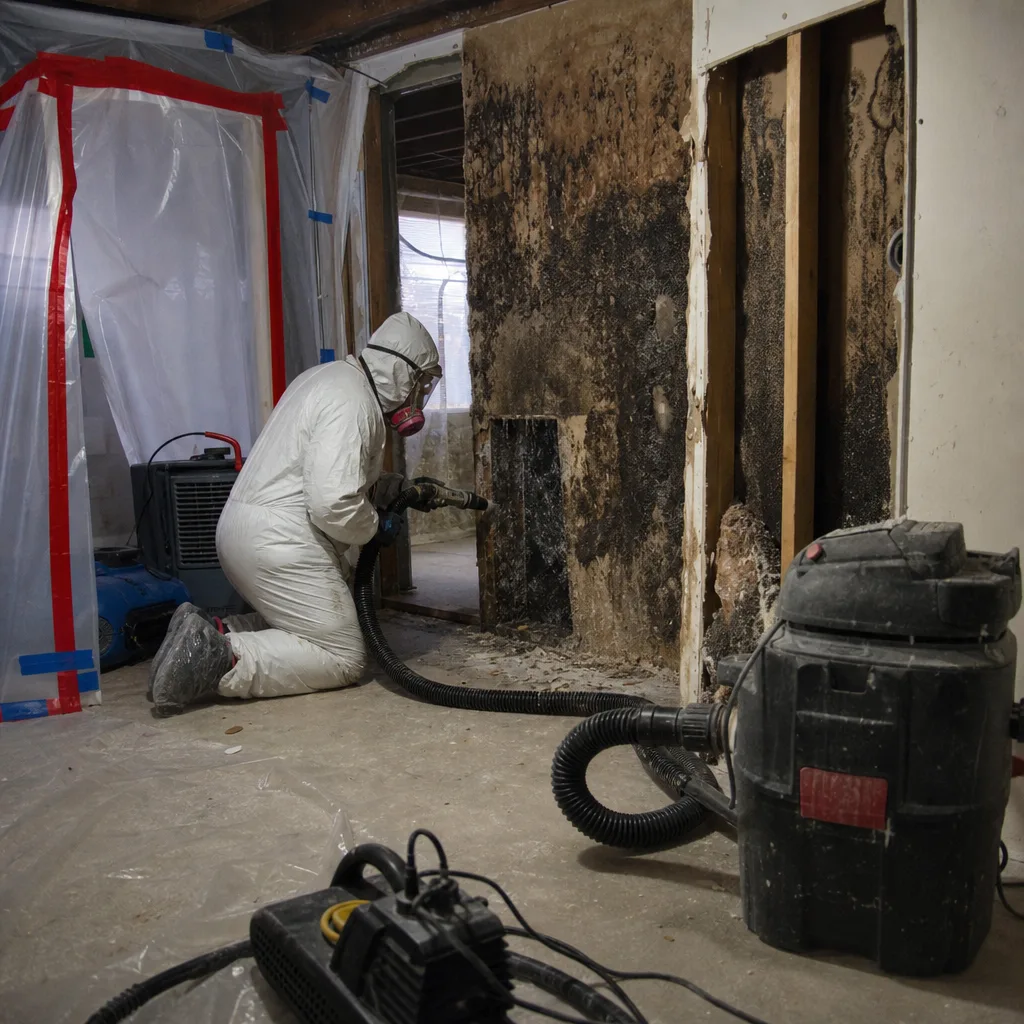
Comparing two restoration estimates feels impossible when one describes “dry out living room” and the other lists “deploy 1 LGR dehu, 2 air movers, daily psychrometric monitoring, 3-day minimum.” Xactimate category codes solve this by forcing both contractors to speak the same language.
Here’s how to line up competing bids:
- Request both estimates in Xactimate format. Professional contractors can export this. If one refuses, that’s information.
- Compare the category codes line by line. WTR-DRY is water damage drying. WTR-EXD is extraction and demolition. WTR-CLN is cleaning and sanitizing.
- Check the unit prices within each category. One contractor may charge $85 per day for a dehumidifier while another charges $125. Ask why.
- Verify the quantity and duration. Three air movers for two days is not equivalent to two air movers for four days, even if the total line-item cost is similar. The drying science depends on proper air changes per hour.
- Look for omitted categories. A bid with no WTR-MON (monitoring) line item means no daily moisture readings, which means no proof of dry standard achievement.
The Xactimate price list is updated quarterly and varies by ZIP code. Miami Beach’s 33139, 33140, 33141, and 33154 ZIP codes use the Miami-Dade pricing region, which runs higher than rural Florida due to labor costs and equipment availability. A contractor using national default pricing instead of localized pricing may underestimate your job and request change orders later.
At DryMark Restoration Miami Beach, we provide Xactimate-formatted estimates as standard. If you bring us a competitor’s written estimate, we’ll review it line by line in a Free Second Opinion, identifying category gaps, unit price anomalies, and scope omissions. We’ve found competitor bids that omitted monitoring entirely, that specified insufficient dehumidification capacity for Miami Beach’s coastal humidity, or that planned two days of drying for a Class 3 water loss that required five. The comparison takes 30 minutes and costs nothing.
Miami-Specific Risks: Climate, Codes, and Building Types
Miami Beach’s unique conditions create restoration challenges that inland contractors underestimate or ignore entirely.
Coastal humidity and salt air. Relative humidity in Miami Beach averages 73% annually and spikes above 85% during summer months. This slows natural drying and demands higher-capacity dehumidification. A contractor who sizes equipment for Orlando or Tampa will underperform here. Our crews calculate vapor pressure differential, the force that drives moisture from wet materials into dry air, using equipment from Dri-Eaz and Phoenix with specifications rated for marine environments.
High-rise plumbing and stack systems. Many Miami Beach buildings, especially along Collins Avenue and in South Beach, use vertical plumbing stacks with limited shutoff isolation. A break on the 14th floor can flood six units below before anyone locates the main valve. Restoration in these buildings requires coordination with building management, knowledge of the association’s master policy versus unit owner coverage, and often work after hours when water can be shut down. A contractor unfamiliar with high-rise protocol will waste hours arguing with a doorman instead of extracting water.
Flood zone requirements. Miami Beach sits in Flood Zone AE and VE areas, with base flood elevations varying block by block. Post-loss reconstruction must comply with current FEMA elevation requirements, which may be stricter than when the building was constructed. A restoration contractor who does reconstruction should know whether your property triggers substantial improvement rules, where any repair costing more than 50% of the structure’s value requires full elevation compliance. We’ve seen contractors complete $80,000 rebuilds that the city then required to be torn out for non-compliance.
Historic district and Art Deco review. Properties in the Miami Beach Historic District, including much of South Beach, require Architectural Review Board approval for exterior changes. Even emergency board-ups must use materials and methods approved for historic structures. A contractor who covers a 1935 streamline window with standard plywood may face a stop-work order and fines.
For Fire & Smoke Damage Restoration in Miami Beach, these factors compound. Smoke travels through high-rise HVAC systems in patterns that surprise inexperienced contractors. Salt air corrodes electrical components faster than inland climates, meaning apparently minor smoke exposure can require more extensive replacement. And historic buildings often contain plaster and lathe construction that demands specialized cleaning methods, not standard drywall replacement.
Common Mistakes to Avoid
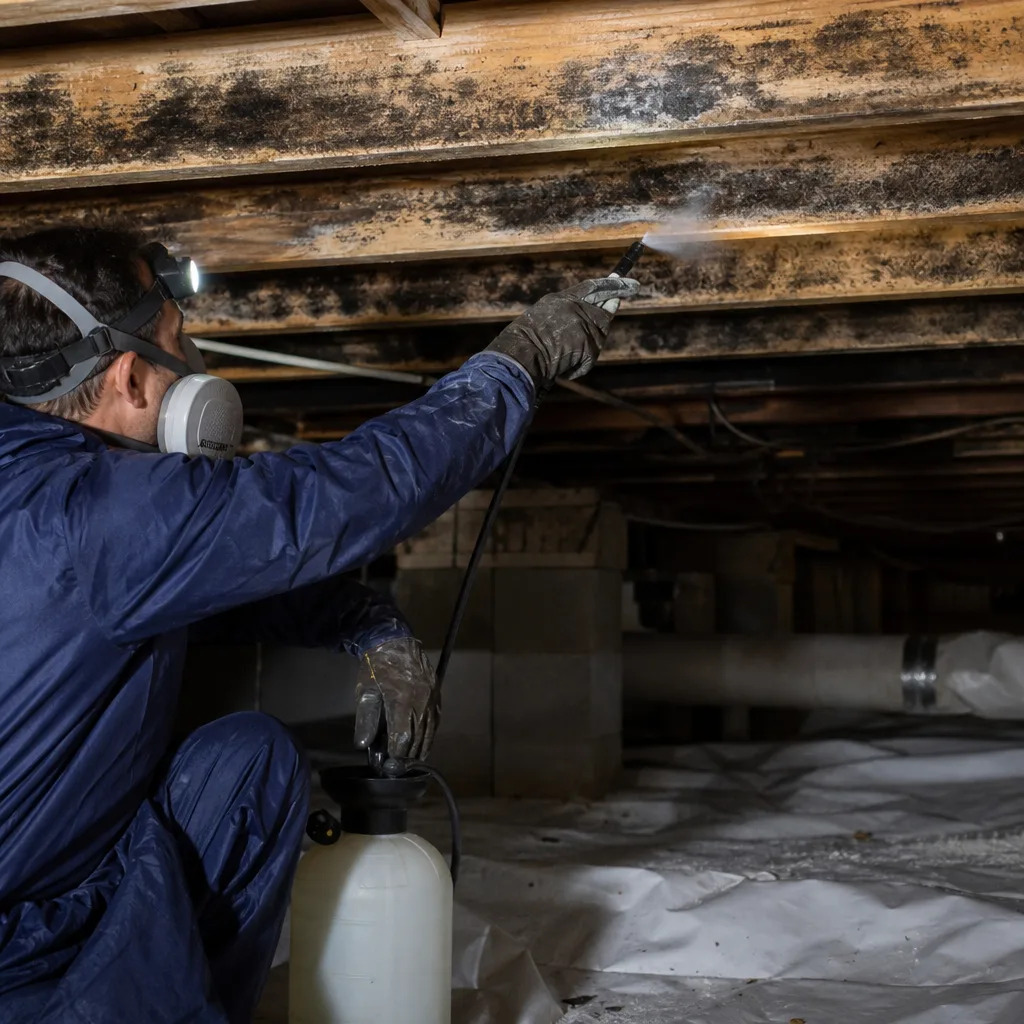
- Signing paperwork while water is still flowing. Stop the source first, even if that means the fire department or building maintenance. A contractor who pressures you to sign before basic stabilization is a contractor who profits from your panic.
- Accepting a verbal estimate. Florida does not require written estimates for emergency services, which is why Haven Standard, Clause 1 exists. A number spoken in your living room is not enforceable and will change.
- Hiring based on who arrives fastest. Speed matters for mitigation, but the contractor who happens to be in the neighborhood may not be the contractor who can document your claim. Ask for the five documents before authorizing work.
- Ignoring permit history. An open permit from a previous contractor can block your new project for weeks. Check Miami-Dade’s portal before you sign.
- Assuming your insurance pre-approved the contractor. Insurers maintain preferred vendor lists, but these are convenience arrangements, not quality guarantees. You have the right to choose your own contractor under Florida law, and the insurer must pay reasonable costs.
- Not photographing the loss yourself. Even if your contractor promises documentation, take your own photos and video before anyone moves anything. Date-stamp them. If documentation disputes arise, your independent record is invaluable.
- Failing to verify mold remediator licensure separately. In Florida, mold assessment and remediation require a specific MRSR license from the DBPR. A general contractor cannot legally perform mold remediation over 10 square feet without it, yet many try.
When to Call a Professional
Call a professional restoration contractor when water has affected more than a single small area you can dry with household fans, when you smell mold but cannot locate the source, when fire or smoke has affected multiple rooms, or when sewage or biohazard contamination is present. These scenarios require equipment, documentation, and safety protocols that homeowners cannot replicate.
In Miami Beach specifically, call immediately when a water loss occurs in a high-rise unit with potential to affect neighbors below, when the property is in a flood zone and storm surge is possible, or when historic district properties require emergency stabilization that complies with preservation rules.
DryMark Restoration Miami Beach offers free estimates in Miami Beach. Call (786) 384-5591 to speak with a live person, 24 hours a day, 7 days a week. We’ll review your situation, explain what documentation you’ll receive, and provide a written price before any work begins, or explore more guides & resources to help you prepare. If you have a competitor’s estimate, bring it for a Free Second Opinion at no charge.
Frequently Asked Questions
Water damage mitigation in Miami Beach typically ranges from $1,200 for a contained Class 1 loss in a single room to $8,500 or more for a Class 3 or 4 loss affecting multiple rooms with significant demolition and drying time. Reconstruction costs are additional and depend on material selections and permit requirements. Call (786) 384-5591 for a written estimate specific to your property - estimates are free and include Xactimate line-item detail.
Your insurance covers what your policy specifies, subject to your deductible and coverage limits. The key variable is documentation: carriers pay claims that are properly documented with photos, moisture logs, and itemized estimates, and they dispute or deny claims that are not. We produce the documentation package that makes your claim payable, but we do not guarantee coverage decisions that depend on your specific policy language. Call (786) 384-5591 and we can review your situation.
For emergency water mitigation, DryMark Restoration Miami Beach dispatches crews with live phone coverage 24 hours a day, 7 days a week. Response time depends on current storm activity and traffic conditions on the MacArthur Causeway or Collins Avenue, but we do not use voicemail trees or next-business-day callbacks for active water losses. Reconstruction work is scheduled, not dispatched, and requires a written scope and agreed price before scheduling.
Florida law requires licensed mold remediation for contamination exceeding 10 square feet. Below that threshold, a general contractor may clean visible mold, but the underlying moisture source must still be resolved. A proper assessment includes moisture mapping to find hidden growth, not just visible inspection. We provide documented moisture baseline reports that show where the water is, not just where the mold shows. Call (786) 384-5591 for an assessment.
You remain the primary contact with your adjuster unless you sign an Assignment of Benefits. We coordinate by providing documentation: photo records, drying logs, Xactimate estimates, and material specifications. Your adjuster can reach our team directly, but all decisions require your approval. This preserves your leverage and keeps you informed. If a contractor insists they will “handle everything” with your insurer, ask specifically whether that requires an AOB.
Refuse, and ask for a direction-to-pay or invoice-and-pay structure instead. An AOB transfers your claim rights to the contractor and exposes you to litigation you did not choose. In Miami Beach’s litigious restoration market, AOB abuse is the leading cause of homeowner policy non-renewal. Any contractor who will not work without an AOB is telling you their business model depends on claim litigation, not customer satisfaction. DryMark Restoration Miami Beach does not use AOB agreements under any circumstances.
The Bottom Line
Hiring a restoration contractor in Miami Beach is a documentation exercise disguised as an emergency response. The contractors who thrive on your urgency are the same ones who profit from your unread signature. The protection is procedural: verify the license, check the permit history, demand the five pre-work documents, refuse broad AOB language, and compare bids using the same category codes your insurer uses. Speed matters for stopping water, but not for signing away your claim. The 30 minutes you spend on verification will save you months of litigation and thousands in disputed charges. Documentation is the service. Everything else is marketing.
Written by Alicia Brennan, Owner at DryMark Restoration Miami Beach, serving Miami Beach since 2011.